
EPS provides rigorous analysis and insightful solutions to address complex challenges in real estate development, land use policy, and local government finance. We are motivated by the role our work can play in shaping places where people live and we strive to create high-quality urban environments that advance the principles of diversity, resiliency, and shared prosperity.
EPS offers a wealth of experience, robust technical expertise, and the ability to offer insightful solutions to address the challenges and opportunities of urban development.
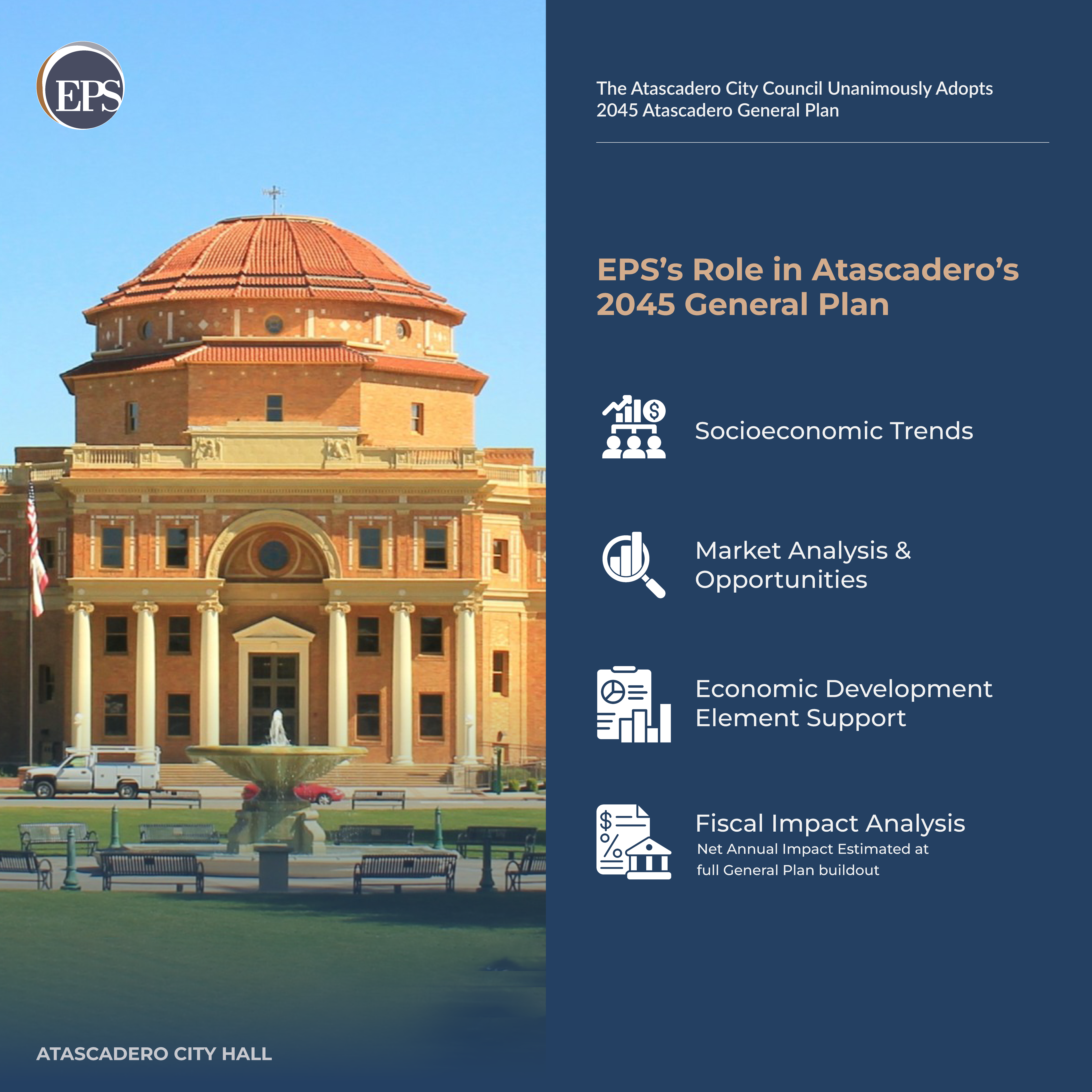
On September 22, 2026, the Atascadero City Council unanimously adopted the comprehensive 2045 General Plan Update. Shaped by a multi-year public engagement process and extensive technical analysis, the Plan provides a framework guiding growth, conserving resources, strengthening the local economy, and investing in infrastructure. It addresses land use, economic development, mobility, recreation and open space, public services and infrastructure, and emergency preparedness.
As an economic and fiscal advisor to the City and consultant team, EPS analyzed the demographic, economic, real estate, and fiscal conditions shaping Atascadero’s future. EPS also estimated the fiscal effects of the Plan’s land use program and projected buildout, helping the City align its long-range growth strategy with fiscal sustainability. This work gave decision-makers a clearer understanding of how planning choices could affect the City’s economy, revenues, and public services over time.
EPS is proud to have supported Atascadero in connecting its community vision with economic and fiscal planning. Following adoption of the General Plan and certification of its Environmental Impact Report, the City will move forward with implementation, including updates to the Zoning Code. EPS looks forward to seeing Atascadero build on its strengths and advance a vibrant, fiscally sustainable future.
Find the adopted 2045 Atascadero General Plan Update here: https://records.atascadero.org/WebLink/DocView.aspx?id=139376&dbid=0&repo=Atascadero
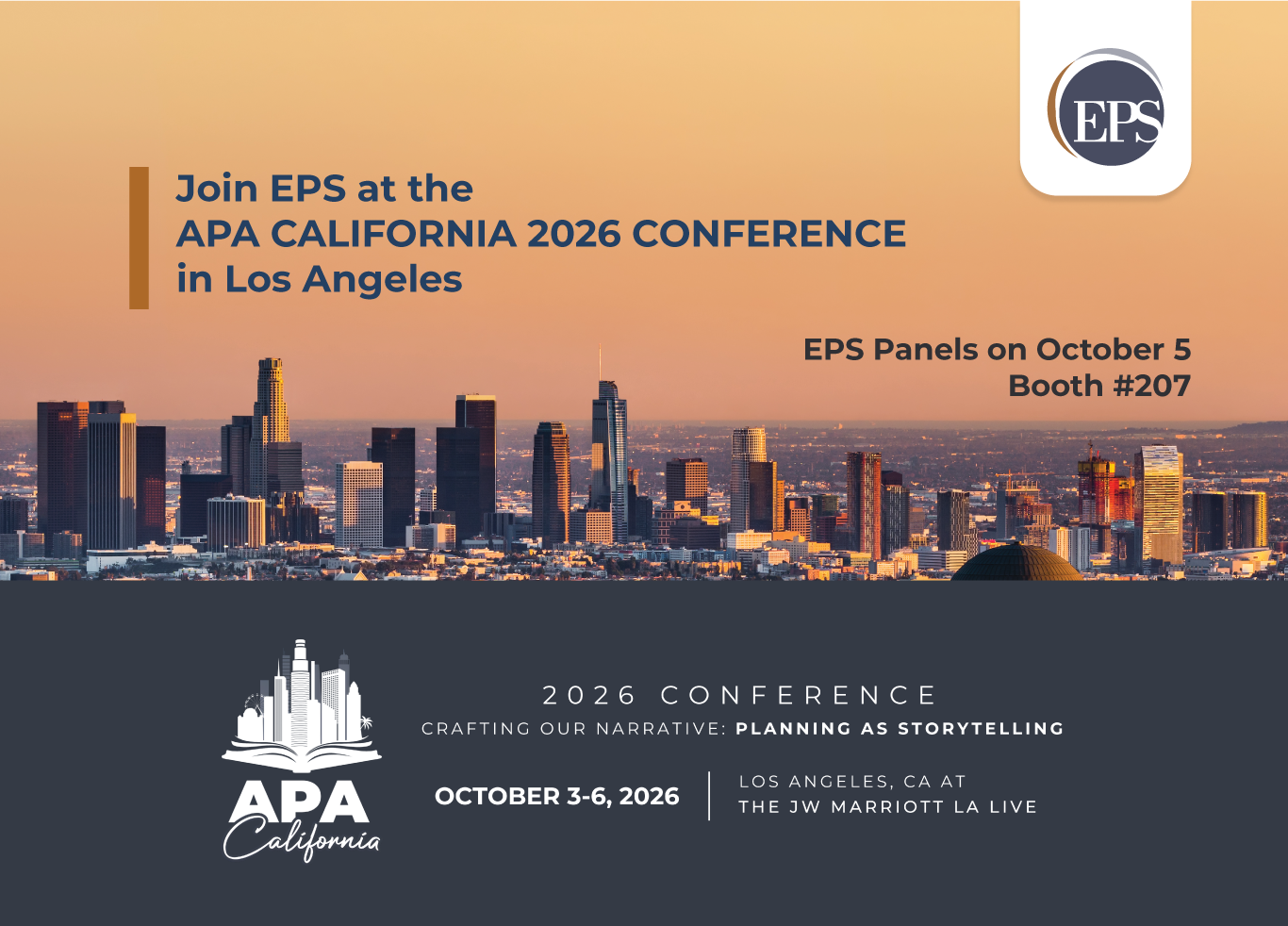
Economic & Planning Systems is heading to the 2026 APA California Conference at the JW Marriott LA Live this October, and we're looking forward to leading two exciting sessions!
On Monday, October 5 from 1:00–2:15 PM, EPS Principal Amy Lapin moderates Funding Climate Resilience Initiatives: State & Local Tools, Strategies, and Implementation Lessons (Room: Gold 2). Amy will be joined by Matthew Gonser of LA County's Chief Sustainability Office, Nuin-Tara Key of California Forward, and Darren Suen of the San Joaquin Area Flood Control Agency and City of Elk Grove. The panel explores how public agencies are funding climate resilience work and moving it from plan to implementation.
At the same time, EPS Vice President Thomas Gonzales moderates It's 2026, Have You Updated Your Impact Fee Program? (Room: Atrium III), featuring April Apodaca of the City of Long Beach, Lutfi Kharuf of Best Best & Krieger LLP, and Katy Cole of Fehr & Peers. The session covers AB 1600 and 602 compliance, common pitfalls in fee program updates, and the basics of Nexus Studies.
Attending the conference? Stop by Booth 207 to talk shop, grab a sticker, and keep the conversation going before or after both sessions.